
Wagyu Dreams, Reality Check: What Overseas Fans Should Know Before Eating Beef in Japan
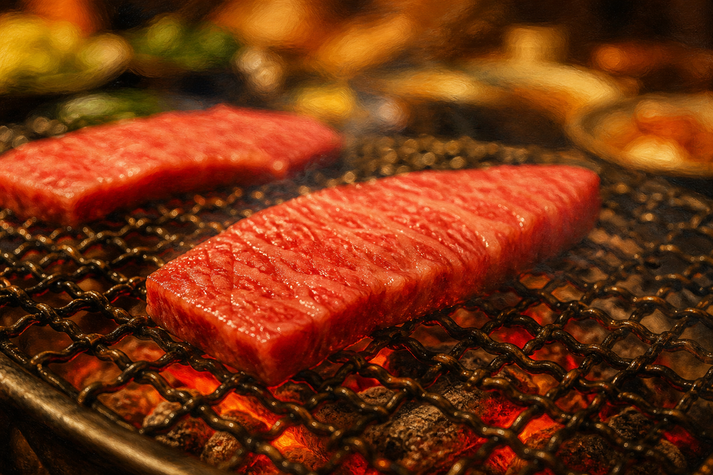
Across Europe today—from Berlin to Hamburg, Paris or Barcelona—“Wagyu” has become a kind of global food status symbol. You see it on menus everywhere: burgers, steaks, sushi toppings, even casual fusion dishes. For many people outside Japan, Wagyu represents something close to perfection: authenticity, honesty, craftsmanship, and a belief that anything labeled “Japanese” must be genuine. But that image deserves a reality check, especially if you are planning a trip to Japan specifically to eat Wagyu.
A recent scandal in Japan highlights why blind trust is risky. According to reporting by Yomiuri Shimbun and Minami Nippon Shimbun, the Kagoshima-based meat company Mizusako Livestock Co., Ltd. was found to have engaged in systematic mislabeling of beef products. This was not a minor labeling error or a one-off mistake. Authorities confirmed that beef sold as premium “Kuroge Wagyu” was in reality partially or entirely sourced from other breeds, including dairy cattle such as Holstein and crossbreeds. Even more concerning, beef labeled as “Kagoshima origin” sometimes came from other prefectures like Okinawa or Miyazaki, and in some cases, the individual cattle identification numbers—central to Japan’s traceability system—were falsified.
The scale of this case is what should make overseas Wagyu fans pause. Around 27 tons of beef were involved. The products were distributed widely, including through Japan’s furusato nozei system, where consumers donate to regional governments in exchange for local specialty products. In total, roughly 47,000 orders were affected, representing about 7.7 billion yen in donations. Multiple cities, including Kagoshima and Ibusuki, have formally demanded that the company compensate donors either with equivalent products or vouchers, and officials have publicly criticized the company’s response as insufficient and lacking sincerity. Law enforcement has also stepped in, with searches conducted under suspicion of violations of Japan’s Food Labeling Act.
This matters not just as a domestic Japanese issue but as a signal to international consumers. There is a persistent myth outside Japan that Japanese companies do not lie, or that fraud is somehow incompatible with Japanese business culture. That belief is simply wrong. Japan has had repeated food-related scandals over the years—mislabeling of Kobe beef, origin fraud in restaurants, and even cases of expired food being relabeled and resold. The difference is not the absence of wrongdoing, but rather how it is handled: often formally, sometimes quietly, and occasionally only becoming visible when authorities intervene.
For Wagyu specifically, the issue is even more complex. “Wagyu” is not a single, universally enforced global standard. In Japan, true Wagyu—especially Kuroge Washu—comes with a detailed grading and traceability system. But even within that system, this scandal shows that manipulation is possible. Outside Japan, the term is even more diluted. In Europe, much of what is sold as Wagyu is crossbred beef, often raised locally with some genetic lineage traced back to Japanese cattle decades ago. In some cases, it has no meaningful connection to Japan at all beyond marketing language.
If you travel across Germany, you will find many Japanese or Japanese-inspired restaurants offering Wagyu dishes. For example, in Berlin there is Ushido - Japanese BBQ, where Wagyu is part of a broader yakiniku-style experience. In Hamburg, NIKKEI NINE offers Wagyu as an upgrade within a high-end omakase-style menu blending Japanese and Peruvian influences. Moving to Düsseldorf, which has one of the largest Japanese communities in Europe, you find places like Nagaya and QOMO Restaurant & Bar serving Wagyu in refined settings, often alongside sushi or modern fusion dishes. In Frankfurt, Kabuki Frankfurt offers teppanyaki-style Wagyu, though even there timing and menu limitations apply. Bonn features Yunico, a Michelin-starred restaurant where Wagyu appears in a more experimental fine dining context. And in Munich, Koi includes Wagyu among its Japanese offerings.
These restaurants are not necessarily doing anything wrong. Many are transparent, and some import genuine Japanese Wagyu with proper certification. But as a consumer, you often cannot easily verify what you are actually getting unless the restaurant provides detailed sourcing information. The Kagoshima scandal demonstrates that even within Japan, with strict systems in place, misrepresentation can occur at scale. So when you see Wagyu casually offered across Europe, sometimes at surprisingly accessible prices, it is reasonable to question what exactly is being served.
Another important dimension of the scandal is its connection to furusato nozei. This system is built on trust and regional pride. People donate to specific towns because they want to support local producers and receive authentic regional specialties in return. In this case, that trust was broken. Consumers believed they were receiving Kagoshima Kuroge Wagyu, one of Japan’s most prestigious beef brands, but instead may have received a mix of different meats. For Japanese consumers, this is not just about food quality but about a betrayal of regional identity and public trust.
From a broader perspective, the incentives behind such fraud are easy to understand. Genuine Japanese Wagyu is extremely expensive to produce. It requires specific breeding, feeding, and long fattening periods. The price gap between authentic Wagyu and other types of beef can be enormous. That gap creates a strong temptation to substitute or blend while maintaining premium labeling. When a company operates at large scale, as this one did, even small percentage manipulations can translate into massive profits.
For overseas Wagyu fans planning a trip to Japan, the takeaway is not to avoid Wagyu but to approach it more intelligently. In Japan, you should look for restaurants that provide clear traceability information, including the farm, prefecture, and individual cattle ID. Be cautious of deals that seem too cheap, because genuine A5-grade Wagyu has a price floor that is difficult to undercut legitimately. High-end or specialized restaurants are generally safer, but even then, asking questions is not inappropriate.
Your own observation from traveling across Europe—that Wagyu appears everywhere and sometimes feels questionable—is exactly the right instinct. The global “Wagyu boom” is driven as much by branding as by substance. The word itself has become a marketing tool, often detached from its original meaning. This Japanese scandal does not contradict that trend; it reinforces it by showing that even at the source, systems are not foolproof.
Wagyu remains one of the most remarkable food experiences in the world. The texture, marbling, and flavor of true Japanese Wagyu are difficult to replicate. But the idea that it exists in a completely pure, fraud-free ecosystem is a myth. Like any high-value global product—wine, olive oil, truffles—Wagyu is vulnerable to mislabeling and abuse. The difference between a great experience and a disappointing one often comes down to how informed and skeptical you are as a consumer.
In the end, the lesson is simple: enjoy Wagyu, in Europe or in Japan, but don’t rely on the label alone. Trust, especially in food, should always be backed by verification, or like us who just enjoy the foods not caring about the labels.
Tasty things are tasty!
Write a comment